


Understanding Why Statin Severe Muscle Risk Prediction Matters
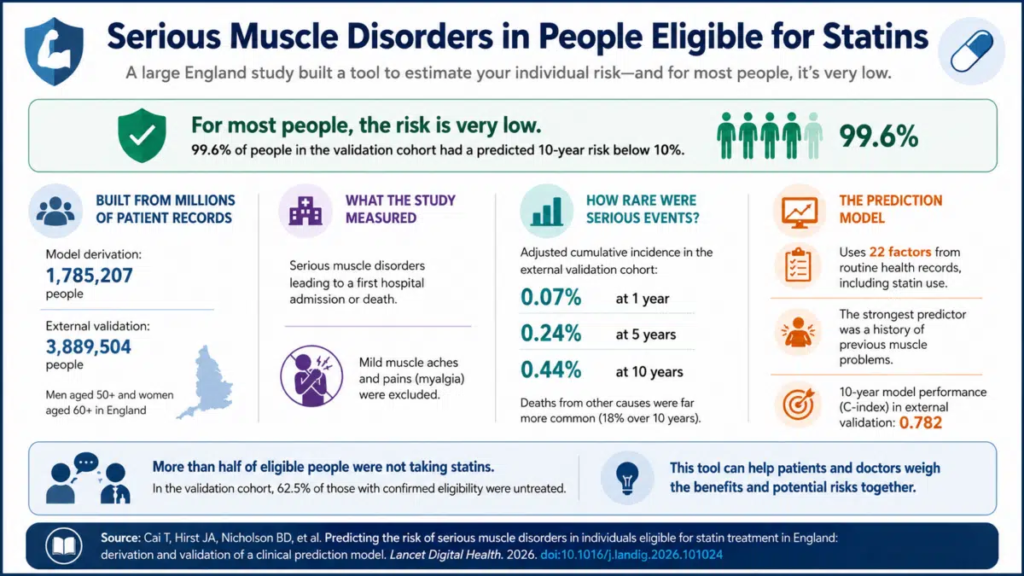
Statins are among the most commonly prescribed medications worldwide for lowering cholesterol and reducing the risk of heart attacks and strokes. For millions of people, these drugs provide life-saving benefits. However, a small percentage of patients experience serious muscle-related side effects that can impact their health and quality of life. This is why statin severe muscle risk prediction has become an important area of medical research.
Doctors and researchers are now working to identify patients who may have a higher risk of developing severe muscle problems before statin treatment even begins. This personalized approach could make cholesterol management safer and more effective.
What Are Statin-Related Muscle Problems?
While most people tolerate statins well, some may develop muscle pain, weakness, or cramps. In rare cases, severe muscle damage, known as rhabdomyolysis, can occur. This condition can lead to kidney complications if not treated promptly.
The good news is that severe muscle reactions remain uncommon. Even so, healthcare providers are looking for better ways to predict who may be more vulnerable so that treatment plans can be adjusted accordingly.
How Statin Severe Muscle Risk Prediction Works
The goal of statin severe muscle risk prediction is to combine medical history, laboratory findings, genetics, and lifestyle factors to estimate an individual’s risk of serious muscle complications.
Several factors may influence this risk, including:
- Age, especially in older adults
- High-dose statin therapy
- Existing kidney or liver disease
- Drug interactions with certain medications
- Family history of muscle disorders
- Specific genetic variations that affect how the body processes statins
Researchers are developing predictive models that analyze these factors together, helping physicians make more informed treatment decisions.
Why Personalized Medicine Is Changing Healthcare
Modern medicine is moving away from a one-size-fits-all approach. Instead, personalized healthcare focuses on selecting treatments that match each patient’s unique characteristics.
In the case of cholesterol management, statin severe muscle risk prediction may help doctors:
- Choose the most suitable statin medication.
- Prescribe an appropriate dosage.
- Monitor higher-risk patients more closely.
- Consider alternative cholesterol-lowering therapies when necessary.
- Reduce the likelihood of serious side effects.
This strategy improves patient confidence while ensuring they continue receiving the cardiovascular benefits of statin therapy.
Ongoing Research and Future Developments
Scientists continue to study genetic markers and advanced prediction models to improve the accuracy of severe muscle risk assessments. Artificial intelligence and machine learning are also being explored to analyze large patient datasets and identify hidden risk patterns.
As research progresses, healthcare providers may soon have access to faster and more reliable tools that can predict muscle-related complications before symptoms appear. These innovations could make cholesterol treatment safer for millions of patients worldwide.
Although current prediction methods are promising, experts emphasize that they should complement—not replace—clinical judgment and regular patient monitoring.
Should Patients Be Concerned?
Most people taking statins never experience severe muscle problems. The overall benefits of lowering cholesterol and preventing cardiovascular disease generally outweigh the risks.
Patients should not stop taking statins without consulting their healthcare provider. If muscle pain, weakness, or unusual fatigue develops after starting treatment, it is important to seek medical advice promptly. Early evaluation can help determine whether symptoms are related to statin therapy or another underlying condition.
Final Thoughts
The growing focus on statin severe muscle risk prediction represents an exciting advancement in personalized medicine. By identifying patients who may be at higher risk of serious muscle complications, doctors can tailor treatment plans that maximize the benefits of statins while minimizing potential harm.
As medical research continues to evolve, predictive tools are expected to become even more accurate, helping patients receive safer, more individualized cholesterol care. For anyone prescribed statins, maintaining open communication with a healthcare professional remains the best way to ensure effective treatment and long-term heart health.
